Quick answer
What restaurant owners should do next
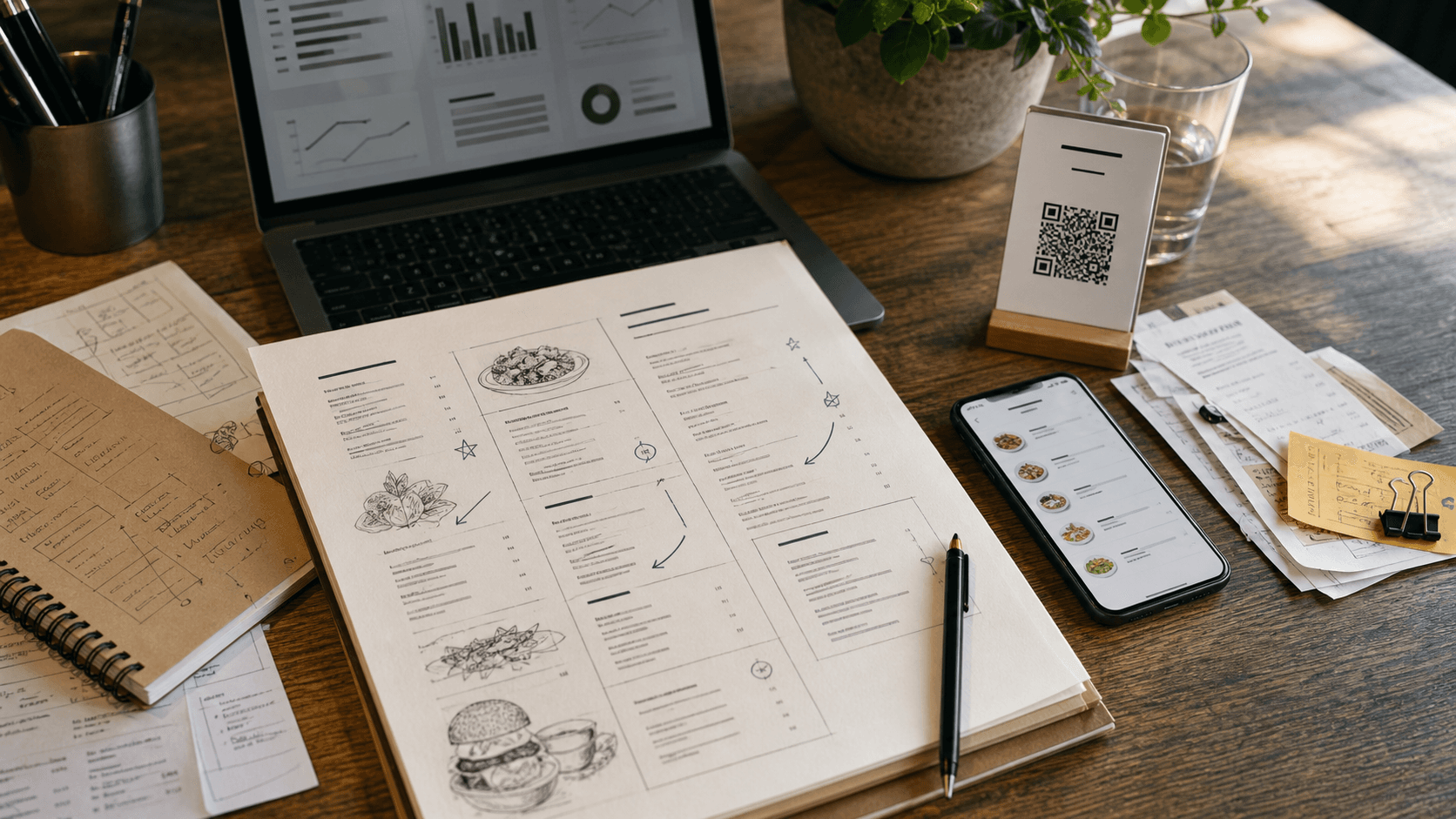
Use the article for strategy, then apply one visible menu change and measure whether guests scan, browse, and tap more items.
TL;DR: Tourists spend more per meal, leave reviews that influence thousands, and become repeat visitors when they feel genuinely welcome. The restaurants that capture this business eliminate friction at every touchpoint: multi-language menus with photos, transparent pricing, flexible payment options, cultural awareness among staff, and strong online discoverability across the platforms tourists actually use. Most of these changes cost little, benefit domestic customers too, and compound over time through word-of-mouth and review momentum.
International tourism surpassed 1.5 billion annual arrivals in 2025, according to the UN World Tourism Organization. In the United States alone, international visitors spent over $185 billion, with restaurants capturing the second-largest share behind hotels. Similar patterns hold across Europe, Southeast Asia, and Latin America. Dining is how travelers experience a destination, and they budget accordingly.
Yet most restaurants — even those in prime tourist corridors — still operate as if every guest speaks the local language, understands local customs, and knows how tipping works. The result is predictable: confused tourists order less, enjoy less, review poorly, and steer other travelers elsewhere.
This guide covers the practical changes that break that cycle.
The Tourist Dining Opportunity
Tourists Spend More Per Meal
Research from the National Restaurant Association shows that tourists spend 40-60% more per restaurant visit than local diners. They eat out for every meal, treat dining as entertainment, and are more likely to order appetizers, desserts, and cocktails. For a restaurant with an average domestic check of $35, tourist checks routinely land in the $50-65 range.
The Repeat Visit and Recommendation Engine
Tourists who have a positive experience do three things. They come back during multi-day trips. They tell other travelers — a single positive review on TripAdvisor, Dianping, or Tabelog influences dozens of future visitors from the same country. And they share on social media, tagging your restaurant on Instagram, Xiaohongshu, and LINE.
Travel communities are tight-knit. One enthusiastic review in Japanese can drive a measurable uptick in Japanese tourist visits for months.
The Cost of Indifference
When a tourist has a bad experience — they could not read the menu, got surprised by hidden charges, or could not pay with their card — they leave a review in their native language that other travelers from that country will read. A pattern of negative reviews in Mandarin can quietly redirect high-spending travelers to your competitor. The asymmetry is stark: one bad review in a language you cannot monitor can cost more than a dozen good reviews in English.
Make Your Menu Accessible
The menu is where the tourist experience succeeds or fails. A guest who cannot understand what they are ordering will not enjoy the meal, regardless of food quality.
Offer Multi-Language Menus
This is the single highest-impact change. Guests who read a menu in their own language spend 8-12% more per visit, order with greater confidence, and leave more positive reviews.
Start with the languages your tourists actually speak. Check your Google Business Profile reviews for language patterns, ask front-of-house staff which languages come up most, and consult local tourism board data. For most restaurants, the highest-value languages after the local one are:
English (if not primary) — the global travel default
Spanish — the most widely spoken second language globally
Mandarin Chinese — Chinese tourists are the highest per-trip spenders
Japanese — Japanese travelers are disproportionately food-focused
French — common among European and Canadian visitors
Korean — fast-growing segment in urban areas
Two or three well-chosen translations will cover the vast majority of your international traffic.
Use High-Quality Photos
Photos transcend language barriers entirely. Menus with photos increase orders of photographed items by up to 30%, according to University of Illinois research. Invest in consistent, well-lit photography for your most popular and highest-margin dishes.
Write Clear, Descriptive Item Names
Avoid jargon, local slang, and cultural references that do not translate. "Grandma's Famous Casserole" means nothing to a tourist from Seoul. Instead: "Baked chicken and vegetable casserole with melted cheese crust." For dishes with internationally recognized names — Pad Thai, Tiramisu, Sushi — keep the original name and add a brief description.
Display Allergen and Dietary Information
International travelers are especially anxious about allergens because they cannot easily communicate restrictions in a foreign language. Label common allergens (gluten, dairy, nuts, shellfish, soy, eggs) with universally recognized icons. Mark vegetarian, vegan, and halal items clearly. In many countries, allergen labeling is legally required. Even where it is not, doing it signals professionalism.
Pricing Transparency
Nothing erodes trust faster than a check that does not match expectations. Tourists from different countries have wildly different assumptions about what a menu price includes.
Show All-Inclusive Prices Where Possible
In much of Europe, Asia, and Latin America, the price on the menu is the price you pay — tax and service included. An American restaurant listing a $25 entree that becomes $33.50 after tax and tip is a 34% surprise. If local convention requires pre-tax prices, add a clear note: "Prices do not include 8.5% sales tax. A 20% gratuity is customary for table service."
Explain Tipping Culture Explicitly
Tipping norms vary enormously. Japanese tourists may feel uncomfortable with the expectation. Australians may be confused. French visitors are accustomed to rounding up 5-10%, not leaving 20%. A single line on your menu — "Gratuity is not included. A tip of 15-20% is customary for good service" — removes the guesswork entirely.
Avoid Hidden Fees
Bread basket charges, split-plate fees, minimum orders, and mandatory service charges should be stated on the menu, not discovered on the check. A tourist who gets charged $5 for bread they assumed was complimentary will mention it in every review they write.
Online Discoverability
Tourists plan dining decisions before they arrive. If your restaurant does not appear when they search, you lose the opportunity before they set foot in your neighborhood.
Optimize Your Google Business Profile
Google Maps is the default restaurant discovery tool for international travelers. Ensure your profile includes correct hours, an up-to-date menu, high-quality photos, and relevant attributes ("Tourist-friendly," "Has Wi-Fi," "Accepts credit cards"). Respond to reviews in the reviewer's language when possible — even a brief thank-you in Japanese demonstrates awareness.
Claim and Maintain TripAdvisor
TripAdvisor remains the primary discovery platform for international travelers, particularly from Europe. Claim your listing, upload photos, and respond to reviews. The "Traveler's Choice" badge carries real weight with tourists who rely on the platform.
Get Listed on Region-Specific Platforms
Different tourist segments use different platforms:
Chinese tourists: Dianping, Xiaohongshu, Meituan
Japanese tourists: Tabelog, Gurunavi
Korean tourists: Naver, MangoPlate
European tourists: TheFork (France, Italy, Spain), Google Maps
Identify where your primary tourist segments search and focus there.
Make Your Website Multi-Language
If your website is English-only but 25% of your visitors browse with Spanish-language settings, you are leaving money on the table. At minimum, ensure your menu page, hours, and location are available in the languages your tourists speak. A digital menu platform that handles translation automatically — like FlipMenu, which offers AI-powered menu translation — removes the burden of keeping parallel content in sync.
Payment Flexibility
A tourist who cannot pay is a tourist who leaves. In 2026, that means supporting the full spectrum of international payment methods.
Accept International Cards
Many restaurants use processors that decline international cards or fail to handle chip-and-PIN cards from Europe. Ensure your terminal supports Visa, Mastercard, American Express, UnionPay (critical for Chinese travelers), and JCB (critical for Japanese travelers). UnionPay alone serves over 9 billion cards worldwide.
Enable Contactless and Mobile Payments
Support Apple Pay and Google Pay as a baseline. For Chinese tourists, Alipay and WeChat Pay are essential — many Chinese travelers do not carry international credit cards. Adding these payment methods is straightforward through most modern POS providers and can drive an immediate increase in Chinese tourist visits.
Display Accepted Payment Methods Visually
Place payment logos on your door, host stand, and check presenter. Tourists scan for these logos to confirm they can pay before committing to a meal. If you are cashless, state it clearly on your door, menu, and Google Business Profile.
Cultural Sensitivity in Service
Hospitality norms differ across cultures. What feels attentive in one culture feels intrusive in another.
Understand Different Pacing Expectations
American service is fast: water immediately, orders taken within minutes, check delivered proactively. This can feel rushed to European diners accustomed to two-hour meals. European service is slower and more hands-off — the check does not arrive until requested.
The best approach is responsive flexibility. Read the table. If guests are lingering, give them space. If they are signaling, move quickly. When in doubt: "Would you like a few more minutes, or can I bring the check?"
Be Aware of Dietary and Religious Practices
Your tourist guests may have dietary requirements rooted in religion:
Halal (Muslim travelers) — no pork, specific preparation requirements
Kosher (Jewish travelers) — no mixing of meat and dairy
Hindu vegetarianism — no beef, often no eggs
Buddhist preferences — many avoid meat, particularly beef
You do not need to cater to every system, but knowing they exist allows informed conversations when a guest asks "Is this halal?" or "Does this contain beef?"
Handle Language Barriers with Patience
Slow down. Speak clearly and simply. Avoid idioms. Use gestures and point at menu items. Never raise your voice — speaking louder does not help. The patience you show in those moments is what the guest will remember and write about.
Physical Environment
Small changes to your physical space make a disproportionate difference for international visitors navigating unfamiliar surroundings.
Multilingual Signage and Wayfinding
Ensure restroom signs, exit signs, and important notices include universally understood icons. If your restaurant has a complex layout, use arrows and visual cues. A tourist who cannot find the restroom should not have to ask.
Offer Free Wi-Fi
International tourists frequently lack reliable mobile data. Free Wi-Fi is one of the most frequently mentioned positives in tourist restaurant reviews. Make the password visible on table tents or the menu. Connected guests use translation tools, post photos while still dining, and leave reviews before they forget.
Consider International Power Outlets
A charging station or multi-standard outlets near a comfortable seating area signals that you understand traveler needs. At minimum, keep a couple of universal adapters behind the host stand that guests can borrow.
Staff Training for International Guests
Your team is the human interface of your restaurant. The best menu and payment system cannot compensate for staff who are visibly frustrated by a language barrier.
Teach Basic Phrases
Knowing "hello," "thank you," and "enjoy your meal" in Spanish, Mandarin, Japanese, and French goes a remarkably long way. Create a laminated card with key phrases and phonetic pronunciations. Keep it behind the server station.
Train on Translated Menu Versions
Staff should know your multi-language menu exists and how to present it. A server who says "We also have this menu in Japanese, would you like that?" creates an immediate moment of relief. If your menu is digital via QR code, train staff to assist guests who may not be familiar with scanning.
Equip Staff with Visual Aids
A tablet showing dish photos, a printed card with allergen icons, a map showing restroom locations — these tools reduce anxiety for both staff and guests during language-barrier interactions.
Leveraging Technology
Technology has made serving international guests dramatically easier. Today's tools are fast, affordable, and integrated.
QR Code Menus with Automatic Translation
A QR code that opens your menu on the guest's phone is the most effective technology for tourist-friendly dining. Guests see the menu in a format they control — they can zoom, translate, and browse at their own pace. With a platform like FlipMenu, the menu automatically displays in the guest's preferred language based on their phone settings, with no action required.
Digital menus also solve maintenance. When you update a dish or price, the change propagates to every language instantly. No reprinting, no version mismatches.
Digital Review Collection
A prompt after the meal — via QR code on the check presenter — can guide tourists to leave a review. International guests are often willing but do not think to do it unprompted. A gentle nudge at the right moment increases review volume significantly.
Analytics to Understand Tourist Traffic
Track which languages your visitors use, which countries they come from, and which items they view most. This data drives decisions about which languages to add, which dishes to photograph, and which segments to target.
Free to start. Turn the ideas into a live menu.
Build a digital menu in minutes, update instantly, and see which items your guests actually tap.
Building a Reputation as Tourist-Friendly
Being tourist-friendly is not just operational — it is a marketing position you can actively build.
Earn and Display Platform Badges
TripAdvisor Traveler's Choice is a trust signal international visitors actively look for. Display it on your door and website. Use Google Business Profile attributes to mark your restaurant as "Tourist-friendly" and other relevant descriptors.
Encourage Reviews in Multiple Languages
When international guests compliment you verbally, invite them to share online: "We would love a review on Google — even in your own language." Reviews in diverse languages signal to future travelers that your restaurant welcomes international guests.
Partner with Local Tourism Organizations
Hotels, tour operators, and convention centers maintain recommendation lists. Introduce yourself to concierges at nearby hotels. Provide translated menus, hours, and a brief note about why your restaurant is a good choice for their guests. A concierge recommendation outperforms any advertisement.
Highlight International Friendliness on Social Media
Share posts showing your multi-language menu, international payment options, or happy tourist groups (with permission). Tag location-specific hashtags. This content addresses the anxiety tourists feel when choosing where to eat.
Frequently Asked Questions
How do I figure out which tourist nationalities visit my restaurant most?
Start with three data sources. Check your Google Business Profile reviews for language patterns and reviewer locations. Ask front-of-house staff to track language-barrier encounters for two weeks. Consult your local tourism board's annual visitor report for country-of-origin breakdowns. If you use a digital menu, analytics will show visitor browser language settings, giving you hard data on which languages your guests prefer.
Is it worth investing in multi-language menus if I am not in a major tourist city?
Yes. The definition of "tourist city" is expanding fast — places like Boise, Asheville, Porto, and Chiang Rai are seeing double-digit growth in international visitors. Beyond tourism, over 67 million U.S. residents speak a language other than English at home. A Spanish-language menu in any American city serves a huge domestic audience. AI-powered translation costs are low enough that the investment pays for itself even with modest international traffic.
What is the fastest way to create a multi-language menu?
A digital menu platform with built-in AI translation. You enter your menu once in your primary language, select target languages, and the system generates translations automatically. Platforms like FlipMenu handle this in minutes rather than the weeks manual translation requires. The key advantage: translations stay synchronized, so when you update a dish or price, every language updates instantly.
How important is it to accept Alipay and WeChat Pay?
If you serve Chinese tourists in any meaningful volume, critically important. Chinese travelers frequently lack international credit cards and rely on Alipay and WeChat Pay for overseas purchases — over 1.3 billion users combined. Adding them is straightforward through most modern POS providers. Restaurants that do often see an immediate increase in Chinese tourist visits.
How do I handle negative reviews in languages I cannot read?
Use Google Translate to monitor reviews in other languages on Google, TripAdvisor, and region-specific platforms. When you find a negative review, translate it, understand the complaint, and respond in the reviewer's language. A thoughtful response demonstrates that you take international feedback seriously and signals to future travelers that your restaurant is aware and responsive. If you see recurring complaints about language barriers, payment issues, or hidden charges, treat them as operational problems to fix, not just reputation issues to manage.